Residential Refrigerator Repair in Port Angeles
Residential Refrigerator Repair in Port Angeles covers everything from a compact apartment refrigerator downtown to a full-size unit in a detached home or a secondary freezer in a utility room. We ask how old the appliance is, which compartment is affected, and whether you see frost or water. Those details guide the inspection and help us bring suitable parts and tools. If your household depends on the refrigerator for medication, baby food, or a week's groceries, tell us when you call so we understand the urgency. We check the repair by monitoring operation and explaining the temperature targets: 40 degrees Fahrenheit or below for the refrigerator and 0 degrees for the freezer.
We compare fresh-food and freezer temperatures, check airflow, and inspect controls before choosing a repair. In Port Angeles homes, a warm refrigerator with a cold freezer often calls for a different diagnostic path than a unit where both sections are warm. We explain what the readings show and test operation after the repair.
A wet floor, damp crisper, or dispenser that will not stop needs the water path checked. We inspect filter seating, tubing connections, and drain flow in Port Angeles kitchens, including spaces where the refrigerator sits close to cabinetry. We clean up the service area and confirm that the leak does not return during testing.
We troubleshoot heavy frost, soft frozen food, and temperature swings by checking door sealing, airflow, and defrost components. Port Angeles homeowners with garage or utility-room freezers should tell us the room conditions. That information helps us distinguish an appliance fault from an operating environment issue.
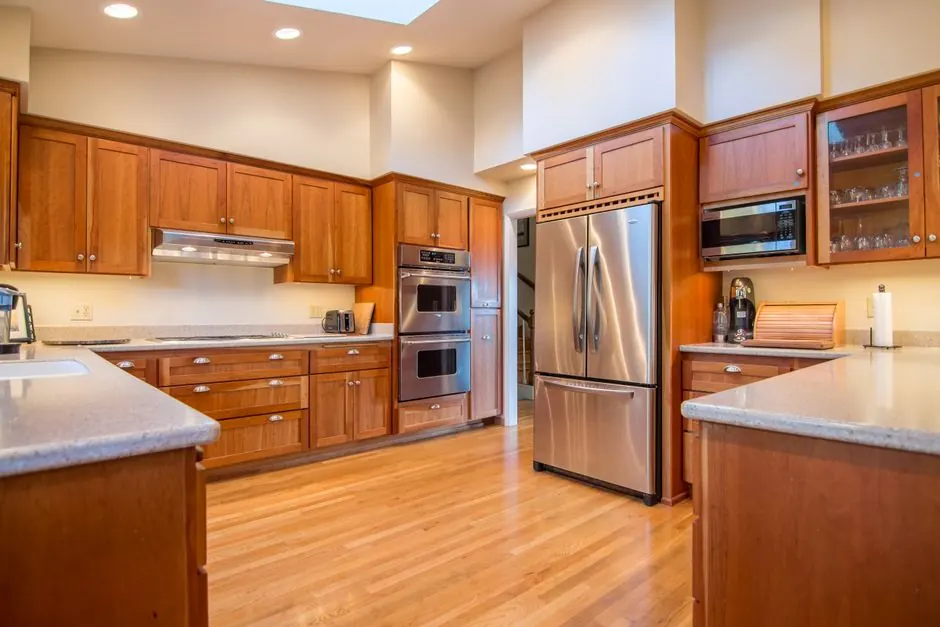
Built-in refrigerators and narrow kitchen openings require careful access planning. We check clearances, water connections, and the route before moving a unit in Port Angeles homes. Protecting cabinetry and flooring matters, and we explain if safe access requires a different approach from a standard freestanding appliance.
- Get a symptom-based diagnosis before parts are replaced, with temperature checks tied to your household's food-storage needs.
- Reduce the risk of floor or cabinet damage with an access plan for tight kitchens, stairs, and water-connected units.
- Know which symptoms require prompt attention, including rising temperatures, recurring leaks, or repeated breaker trips.